

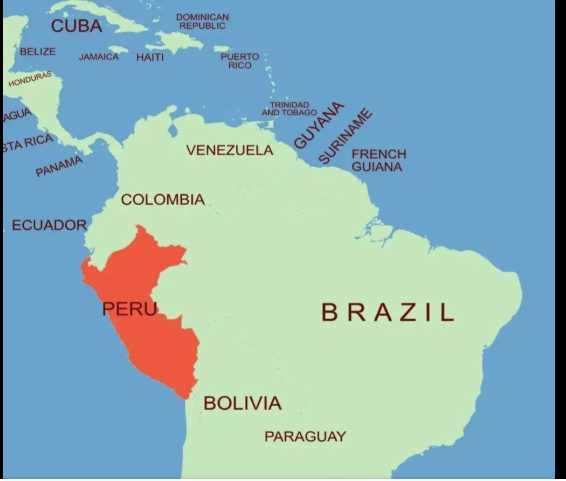
Recently our team travelled across South America to deepen our understanding of key origin products with special attention to Peru – the epicentre of fine cacao and the world’s leading producer of premium organic cacao varieties.
Peru: The Heart of Fine Cacao
Peru is widely recognized as the leading origin for fine flavour cacao, producing some of the most sought-after beans in the global market.
However, the sector is currently facing challenges:
- Cacao prices surged in 2024 and 2025, reducing available volumes
- Buyers reassessed sourcing strategies
- During the price spike, cacao butter was partially replaced as an ingredient by cheaper alternatives
- As of 2026 pricing has almost reverted to pre-2024 levels

At the same time, longstanding myths – such as the idea of “pure Criollo cacao”- continue to influence perceptions. Historically, Criollo referred to traditional cacao, but the original varieties were low-yielding, disease-prone, and inefficient for modern agriculture. Today’s production relies on more resilient and productive Criollo hybrids, balancing quality with sustainability.
EUDR: A Game Changer for Cacao Imports
One of the most important regulatory shifts is the European Deforestation Regulation (EUDR), which will significantly impact cacao sourcing into the EU.
Key Requirements:
- Cacao must not originate from land deforested after 2019
- Farms must be mapped using GPS coordinates (polygons)
- Each batch must be fully traceable
- Importers must submit digital compliance reports
While the regulation aims to protect forests, it introduces:
- Higher operational costs
- Increased administrative complexity
- Potential trade shifts toward less regulated regions
As a result, some producers may prioritise markets outside the EU, such as Asia, the Middle East, and primarily the United States.
From Harvest to Flavour: The Fermentation Process
The journey of cacao begins at the farm, where pods are harvested and split open to extract the beans surrounded by pulp. These beans undergo a natural fermentation process lasting five to seven days.


This stage is critical:
- It reduces bitterness and acidity
- It develops the foundational flavour profile
- It can be seen by the beans’ inside changing colour from purple to brown
Without proper fermentation, cacao remains inedible and unsuitable for further processing.
Quality Control and Logistics
Once fermented, beans are transported – often from remote mountainous regions – to collection centers. This journey can take several hours due to challenging infrastructure.
At collection points, key quality checks include:
- Fermentation consistency
- Moisture levels (ideally around 6%)
Maintaining proper moisture is essential to prevent mould and preserve quality during storage and transport.
Processing: Where Cacao Becomes a Product
At processing facilities, cacao undergoes several transformation stages:
1. Cleaning
Foreign materials such as stones, sticks, and debris are removed.
2. Roasting
Beans are typically flash-roasted at 80–120°C for about 30 minutes, developing the rich aroma associated with chocolate.
This step is often misunderstood. Unlike dehydration – which uses low heat over long periods – roasting requires high heat for a short duration, to unlock the typical rich cacao flavour.
3. Crushing into Nibs
Roasted beans are broken into nibs, a versatile product used in snacks, cereals, and baking applications.
4. Grinding into Paste (Mass, Liquor)
Nibs are ground into cacao paste using a ball mill, producing a smooth, bitter, unsweetened mass.
5. Separation into Butter and Powder
Using high-pressure presses (200–800 bar), the paste is divided into:
- Cacao butter (fat component)
- Press cake, later milled into cacao powder
The Five Core Cacao Products
From this process, five primary cacao derivatives emerge:
- Roasted beans
- Nibs
- Paste (liquor/mass)
- Butter
- Powder
These form the foundation of all chocolate products.


From Cacao to Chocolate
Chocolate is created by combining cacao derivatives with ingredients such as sugar and milk. The art of chocolate-making lies in adjusting the ratios of paste, butter, and powder to achieve different textures and flavour profiles.
However, the industry faces a quality challenge: some manufacturers replaced cacao butter with cheaper fats like palm oil. While cost-effective, this compromises flavour and requires artificial enhancers.
New Trend: Chocolate Production at Origin
A growing opportunity in the cacao sector is pre-defined chocolate production at origin, particularly in Peru.
Benefits:
- Standard chocolate bases (e.g., 60%, 70% cacao)
- Produced close to the raw material source
- Reduced processing steps for buyers
- Flexibility for further customisation
This approach combines origin expertise with supply chain efficiency, offering ready-to-use chocolate formats for manufacturers.
We have been working with our stable and trusted organic cacao farmers and producers for decades and have established a solid supply of premium, EU cerfied organic cacao products, for the EU market.
Contact us for more information!