

At Abbott Blackstone International, we believe that understanding an ingredient means going far beyond specifications and certificates. It means meeting the people behind the product, seeing where it grows, understanding how it is harvested and processed, and experiencing first-hand the challenges that can affect the supply chain.
Our Purchasing Manager recently spent several weeks travelling through South America, visiting producers, processing facilities and farming communities.
From the remote Brazil nut regions of Bolivia to Camu Camu growing in the Amazonian wetlands and Physalis (Goldenberries) high in the Peruvian Andes, the journey offered a fascinating look behind three very different products.
Bolivia: The Remarkable Journey of the Brazil Nut
The first part of the journey took us to Bolivia, where we work with an organic Brazil nut producer.
Brazil nuts are unlike most agricultural crops because they are not produced on conventional plantations. They grow naturally on huge trees in the Amazon region and are essentially wild harvested.

Rather than climbing the trees or mechanically harvesting them, collectors wait for the large Brazil nut fruits to fall naturally to the forest floor.
The fruit itself resembles a very hard, round coconut. Inside are numerous individual Brazil nuts, each protected by its own hard shell.
Much of Bolivia’s Brazil nut harvest comes from the extremely remote Pando region, with additional volumes originating from Beni. Getting into these areas is far from straightforward. Transport connections are limited, flights can be irregular and road access plays a critical role in moving the harvested nuts out of the forest.
This became especially relevant during recent prolonged road blockages in Bolivia. Trucks were unable to reach some collection areas or transport the harvested nuts out. Without a reliable way of moving the crop, harvesting itself became difficult, and some nuts could no longer be collected or used. The visit therefore wasn’t simply about seeing a facility. It was also about sitting down together and finding practical solutions to secure the volumes required despite the difficult situation. That kind of direct relationship becomes particularly important when unexpected supply-chain challenges arise.
After collection, the hard outer Brazil nut fruit is cracked open to reveal the individually shelled nuts inside. These shells must then also be opened.
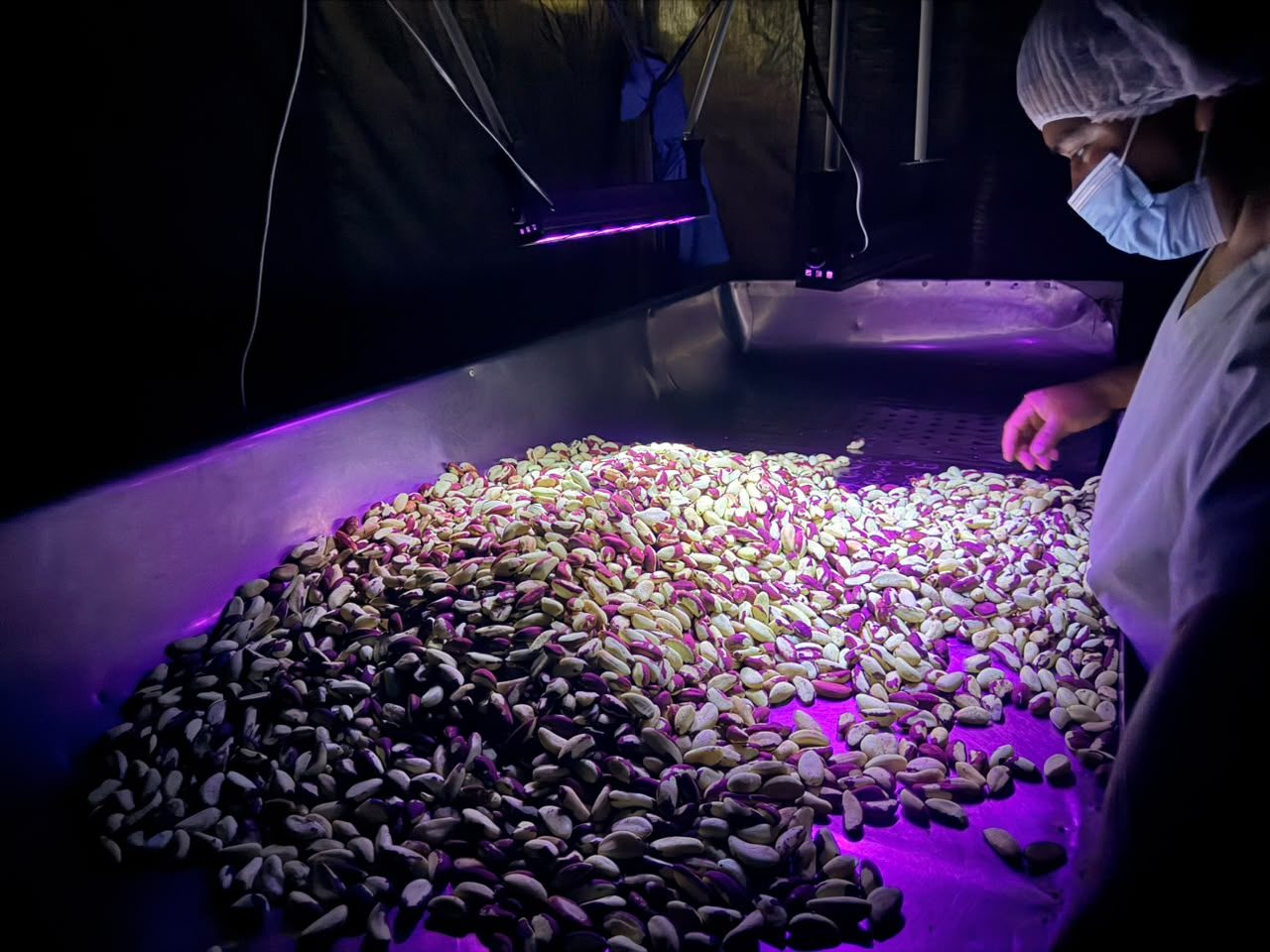

Traditionally, this can be done manually, but the challenge is preserving the valuable whole kernel inside. Excessive force can easily break the Brazil nut, turning what could have been a premium whole nut into smaller pieces. The producer has therefore introduced machinery using pressure to carefully open the shells while protecting the kernel.
After cracking, the Brazil nuts are cleaned and dried before moving on to packaging. It sounds like a relatively simple process, but when you see the remoteness of the growing region and the logistics required to bring the product from the Amazon forest all the way to Europe, you begin to appreciate just how much work sits behind every bag of Brazil nuts.
Peru: Into the World of Camu Camu
The journey then continued to Peru, where we visited one of the producer groups behind our organic camu camu.
Camu camu is one of South America’s most fascinating fruits. The berries are relatively small, with a texture somewhat reminiscent of grapes, but their flavour is extraordinarily sour. For powder production, however, the objective is not to wait until the berries become fully ripe.
Camu camu berries start green and gradually begin developing red colouring as they mature. For our powder, they are harvested when the first red spots begin appearing on the green fruit. This stage is particularly important because it is when the fruit is selected for its naturally high vitamin C content.


Harvesting Camu Camu by Canoe
Perhaps the most memorable part of the visit was seeing the extraordinary environment in which camu camu grows. The plants thrive in areas that flood extensively during the rainy season.
Local houses are built higher above the ground because, when the rains arrive, large parts of the landscape disappear beneath the water. Camu camu trees are perfectly adapted to these conditions and can spend significant periods partially surrounded by floodwater. As the rains begin to ease and water levels gradually fall, harvesting starts. And in some areas, harvesting means going out by canoe.
Farmers pick the camu camu berries by hand and bring their harvest back in small boats. Around 800 farmers work together through the local farming organisation visited during the trip, combining their individual harvests before the fruit is transported onward for processing.
From Fresh Camu Camu to Powder
We also followed the berries into the processing facility. When the camu camu arrives, the fruit is first sorted according to maturity, colour and firmness to ensure that the appropriate berries are selected. The berries are then washed and cleaned before being cut into smaller pieces. Next comes drying.
The prepared fruit is spread across large trays and placed into heated drying equipment. The temperature is adjusted during the drying process, and the fruit remains inside for approximately ten hours until its moisture content has been reduced to around 5%. Once dry, the fruit is milled into powder.

The resulting camu camu powder contains the fruit itself together with its skin and, according to the process observed during the visit, the seed material is also milled as part of the product. The finished result is a naturally tangy powder with the characteristic colour and flavour of camu camu.
Seeing each of these stages personally gives us a much better understanding of the ingredient we ultimately offer our customers in Europe.
High in the Andes: Organic Physalis (Goldenberry)
Another highlight of the Peruvian trip took us in an entirely different direction – high into the mountains to visit organic physalis farms and a newly established processing facility.
Physalis is a small berry with many names. Commonally known in Europe as physalis it is also known as incaberry, peruvian gooseberry and goldenberry.
The farms visited sit at approximately 2,800 metres altitude. Physalis can be planted throughout the year. After approximately six months of growth, the plants begin producing their first harvest. A plant can generally produce two harvest cycles before it is replaced, giving it an agricultural lifespan of roughly one year and the berries are harvested manually.


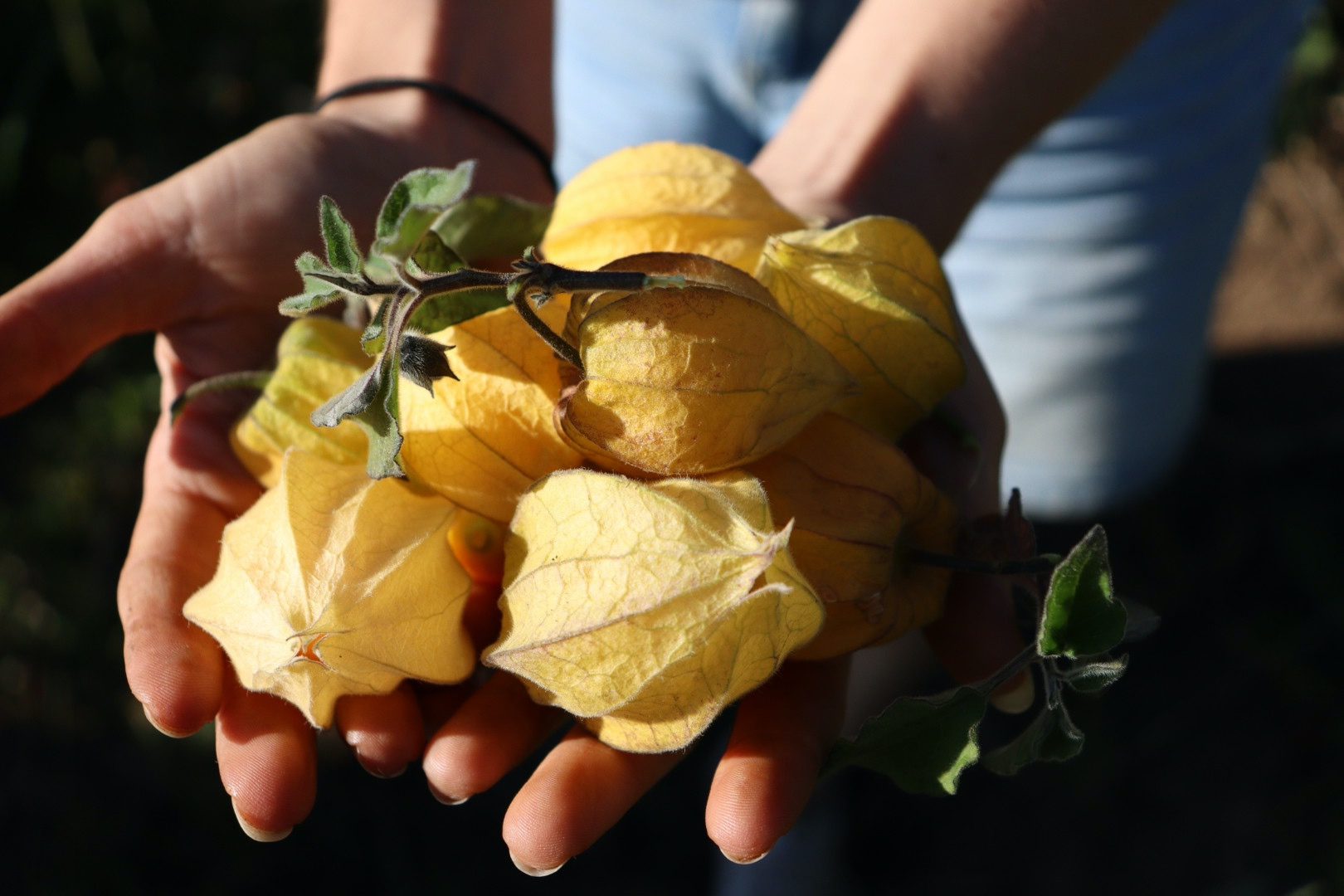
Each berry grows protected inside its distinctive papery husk, which must later be removed before processing.
Solving a Freshness Challenge
One particularly interesting part of this visit was seeing how the producer had addressed one of the biggest challenges associated with physalis: getting freshly harvested fruit into processing quickly enough.
The farms are spread across mountainous areas and many small farmers contribute relatively small quantities. Previously, those volumes had to be accumulated and transported down from the mountains before processing could begin. That takes time. Fresh physalis, however, can deteriorate relatively quickly after harvesting. The solution was to build a new processing facility closer to the farmers in the mountains.
Instead of transporting the freshly harvested berries long distances first, farmers can now bring their production directly to the nearby facility. This shortens the time between harvesting and processing and helps protect the quality of the fruit. For us, it was a perfect example of how investment in processing infrastructure can make a very tangible difference to the final ingredient.

Turning Physalis into Dried Fruit
Once the freshly harvested physalis reach the facility, the papery outer husks are removed. The berries are then washed and cleaned before entering the dehydration process. They remain in the drying equipment for approximately 14 hours.
After drying, quality control becomes very hands-on. The berries are spread over large sorting tables where workers inspect them individually. Any berries that have not dried sufficiently are removed and returned to the dryer. Berries showing quality defects are also separated. Only the properly dried fruit continues to final packing.
Even the discarded outer husks can have another use: they may be returned to farmers or otherwise reused as organic material for fertilisation.


Why We Visit Our Producers
A laboratory report can tell you a great deal about an ingredient. But it cannot show you a farmer harvesting Camu camu from a canoe. It cannot fully explain why a road blockade hundreds of kilometres away can suddenly influence the availability of Brazil nuts. And it cannot show you why building a processing facility closer to physalis farmers can make such a difference to product quality.
That is why we travel.
Visiting our producers, processors and farming communities helps us understand not only what we buy, but how it is grown, harvested and processed – and what challenges exist behind the supply chain.
For our customers, that means better transparency, stronger relationships at origin and a much deeper understanding of the organic ingredients we bring to Europe.
Contact us for more information